
.jpg)


Product sorting
List of products


Frequently Asked Questions – Diamond Blades (FAQ)
1. Is there a universal diamond blade for all materials?
In practice, there is no truly universal blade. Each material requires a different type of segment and bond. However, if you are looking for a blade that comes closest to being universal and can handle clean cutting as well as dry grinding, I recommend our Mr. Yoda FS (125 mm). It is our most popular "hybrid" that handles most tiles and pavers.
2. Which blades do I use and why?
My portfolio only includes tools that haven't failed me in the field:
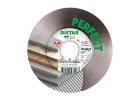
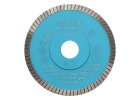
• Distar Shine: My first choice for strictly wet straight cuts.
• Mr. Yoda FS: My most used tool for Jolly (miter) cuts and universal dry work.
• Montolit DNA (125 mm): Cutting-edge DNA technology for fast cutting in hard materials.
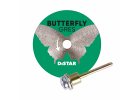
• Butterfly (0.6 mm): For the finest details under water.
3. How to properly "open" a new diamond blade?
New blades (except for the Shine series) need to be prepared by cutting into abrasive material (sharpening stone or old granite). For blades like Mr. Yoda FS or Montolit DNA, a few slow cuts are enough. WARNING: The Distar Shine blade should NOT be opened with an abrasive stone; it is factory-set for wet cutting only.
4. Which blade is best for 45° miter cuts (Jolly edges)?
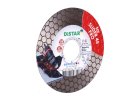
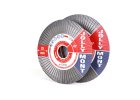
The absolute king here is Mr. Yoda FS (125 mm). It doesn't deflect during 45° cuts and grinds the edge beautifully. A great alternative for dry miter cuts is Distar Edge Dry. If you prefer the Montolit brand, go for Montolit Jollymont. For extra tough porcelain, I recommend PRO5 JOLLY-EDGE-TURBO.
5. Which blade for straight cuts in porcelain or gres?
For the cleanest straight cuts, the TOP blade is Distar Shine. It is designed strictly for wet cutting. For dry cutting with the possibility of edge correction, choose Mr. Yoda FS.
6. How to maintain the blade to make it last longer?
Cleanliness is key. If a (dry) blade starts to burn, just make 10–15 cuts into abrasive material. For the final touch of the edge, I recommend using the Mr. Rapid diamond polishing pad.
7. How do tool RPMs affect cutting properties?
Most blades require high speeds (11,000+ RPM). On cordless grinders with lower RPM, blades can glaze over more quickly, and you will need to sharpen them in abrasive material more frequently.
★★★★★ 99% (long-term average on Heureka.cz)
"Our customers highly value the precision of cuts in porcelain stoneware (gres) and the extreme durability of our blades when working on miter joints (jolly edges)."